By
Emily Mae Czachor
News Editor
Emily Mae Czachor is a reporter and news editor at CBSNews.com. She typically covers breaking news, extreme weather and climate. Emily Mae previously wrote for outlets like the Los Angeles Times, BuzzFeed and Newsweek.
November 9, 2026 / 9:28 AM EST / CBS News
A meteor lit up skies over parts of North Carolina and Tennessee on Thursday night, zooming by at 47,000 mph, according to NASA.
Eyewitnesses have shared numerous photographs on social media of the fireball, which initially sprang into view about 50 miles above the North Carolina town of Robbinsville. NASA said the meteor was also captured by its specialized imaging systems — called sky cameras — which were stationed throughout the region.
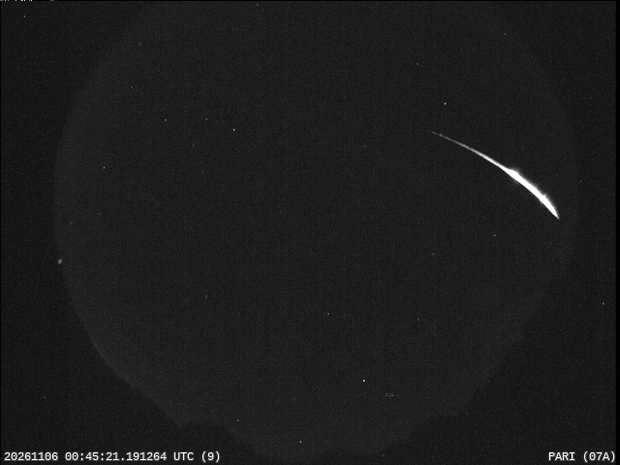
Those cameras tracked the fireball as it proceeded to travel westward into southern Tennessee, eventually dissipating once it reached a spot about 25 miles above the city of East Ridge, near Chattanooga. Just about 10 seconds passed between the meteor's first and final sighting.
NASA said it was able to analyze the meteor using the footage from sky cameras at the Tellus Science Museum in Cartersville, Georgia, and others stationed in Huntsville, Alabama, Tullahoma, Tennessee, and one more location near the Tennessee-North Carolina border. The agency determined that the object was a small piece of an asteroid, measuring two inches in diameter and weighing six ounces.
Meteors, also called "shooting stars," are the visible paths of asteroid fragments that have entered Earth's atmosphere, according to NASA. Astronomers use the term "fireball" to describe an especially bright meteor, which can be seen over a wide area because of how starkly they appear. Some fireballs are much larger than the one spotted over North Carolina and Tennessee last week, with NASA saying they can measure three feet or bigger in size.
NASA said the meteor was not part of the Taurid meteor shower, which is currently active.
In: