
 Getty Images
Our brains thrive on a challenge, but it doesn't all have to be hard work to see the health benefits. Here are three simple and fun ways to protect your brain as you age.
If presented with an easy task or a hard one, which would you take? Chances are we'd all pick the easy task, for good reason. Taking mental shortcuts is built into our biology in order to conserve our energy.
Technology has only enhanced our ability to do so. It's therefore tempting to take shortcuts and complete tasks with the least friction possible. However, if that results in reduced mental effort it could be harming our lifespan and overall health.
There are numerous ways to do so as part of everyday life. "Whatever age we are, there are things that we can do more or less of that might give our thinking skills a bit of a boost," says psychologist Alan Gow from Heriot-Watt University in Edinburgh, Scotland.
And the good news is – as I cover in my newsletter course Live Well For Longer – we don't need to radically overhaul our day-to-day life, but can make small, incremental changes across physical, social and mental domains to protect our brains. Here are three of the most enjoyable to start off with.
 Getty Images
1. Spatial navigation
"For years we've known that people with Alzheimer's often get lost as an initial symptom," says neurologist Dennis Chan from University College London, UK, who specialises in early Alzheimer's detection. And early detection is crucial, he says. "The earlier we identify [cognitive impairments] the faster we can do something about it."
Protecting this brain area could therefore help prevent or delay symptoms. For instance, studies show that ambulance and taxi drivers have among the lowest rates of Alzheimer's-related mortality compared with other roles, precisely because these drivers had been using their brain more for "spatial processing", the researchers propose. It's also long been known that taxi drivers who had spent years learning the city's streets without the use of a map, have an enlarged hippocampus.
We can all work at enhancing our spatial skills, with sports like orienteering or, in children, playing with building blocks
Similarly, one study of healthy men who performed a spatial navigation task for four months showed improved navigational skills and no loss of hippocampal volume, whereas the control participants (those who did not perform the task) did experience expected age-related shrinkage.
It's unclear whether enhancing this part of the brain could prevent dementia, but building extra cognitive reserve could offer extra protection. This helps explain why, as Chan says, post-mortem brain analysis has shown that some elderly individuals had extensive Alzheimer's-related changes in their brain tissue yet showed no symptoms while alive. One reason why, he says, is because their scaffolding must have been robust – potentially helped by the way they lived, though genetic factors are also believed to play a role.
And despite the increasing risk of dementia as we age, it's those who do not show symptoms that Chan says should be encouraging for all of us. "They are generally those who are physically active, more intellectually active, and those who are more socially active."
 Getty Images
This has also been shown by a large observational study, which found that those who were more socially active in midlife and later life had a 30-50% lower risk of dementia as it increased cognitive reserve, the authors note.
This is thought to be because staying social helps lower stress, making us more resilient to life's challenges. Chronic stress on the other hand, has been linked to the loss of neurons in the hippocampus. "The protective factor is the ability to discuss, to debate, to share ideas. Those conversations can be protective for the brain as well," says Pamela Almeida-Meza, an epidemiologist at King's College London.
When we interact with others we are using numerous parts of the brain, from language, to memory to forward planning. "There's a cognitive mentally stimulating aspect. So that might promote brain health, but we also know that having good social connections reduces a range of physiological stressors," says Gow. (Read more about how friendships can make you healthier.)
 Getty Images
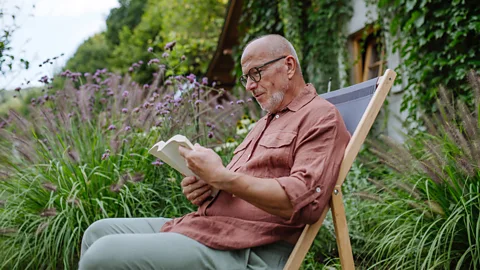
3. Lifelong learning
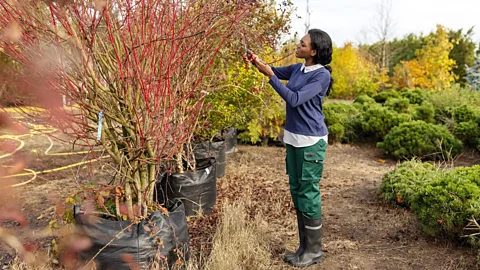
Gardening has been shown to preserve cognitive function
"It's precisely that plasticity and that ability to regenerate new nerve cells and synapses that gives people resilience against Alzheimer's," says Chan.
While we can benefit at any age, this is particularly important later on in life, says Almeida-Meza. That's because as we grow older our day-to-day life becomes more routine and we are given fewer opportunities to learn.
Ultimately, what's clear is that any activity that stimulates the brain is beneficial for overall health, whether it's a new route on a walk, reading Proust or prioritising social relationships. All of this helps build a resilient brain and slows down age-related decline, as well as making life more enjoyable in the process.